In a decade, smartphone cameras have developed in an astonishing way and made hundreds of millions dependent on them. In this article, we begin to learn about the way companies developed cameras until they reached their current form, which led to the dispensation of largely independent digital cameras.
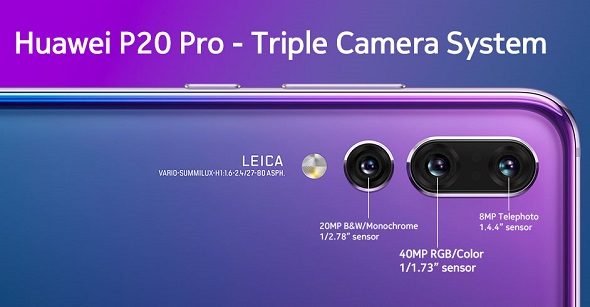
It is certain that there are technical differences to varying degrees between photography and its photography arts, and cameras in cell phones. There is no doubt that the latter is constantly evolving, so will a day come and be dispensed with any other cameras? Here's a look at the ways this technology has improved over the years.
More megapixels
Megapixel is the first thing that comes to mind when talking about cameras. It is the basic criterion for the accuracy of the image captured by the phone's camera, as some people imagine. The first smartphone did not contain a camera in any way, and at the beginning of the emergence of the smartphone in the true sense, specifically when the iPhone appeared in 2007, the rear camera was only 2 megapixels, and it required constant focus during photography, and was able to take a picture at a size of 1600 * 1200 pixels. The Samsung S9 and iPhone X have 12 megapixel cameras.
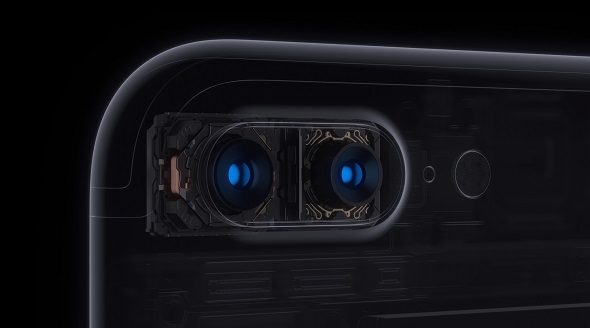
In the early days of smartphone cameras, the megapixel was the primary criterion by which to judge the superiority of the cameras. And then it became clear that this judgment is unfair and incorrect, as there must be a set of other factors that affect the quality of the image, as we will see shortly.
The problem is increasing the number of pixels at the expense of the pixel size itself. The smaller the pixels, the less light they allow in, and vice versa. The first attempt to reduce the number of megapixels and increase the pixel size was in the HTC UltraPixels technology with the One phone that was introduced in 2013, which made the sensor capture more light and keep the camera shutter open for a longer period of "fractions of a second." HTC was on its way to something, but it didn't continue and we don't know what happened. It could be said that the megapixel race is over, and a new era of conflict between smartphone makers has begun in other respects. Or that HTC’s financial crises and near bankruptcy cut research spending.
Larger sensors

This is another fact that is universally agreed upon, that the larger the image sensor in the camera, the better the end result, "this allows capturing more light and color details." In addition to other enablers, the image sensor is the most important.
The lack of a large area for the camera in smartphones, makes the area of image sensors confined to between 1/3 and 1 / 2.3 inches, which is much smaller than those found in independent digital cameras. Therefore, the sensor size has not changed much over the years in smartphones, due to physical limitations, and then improvements have been directed to other areas.
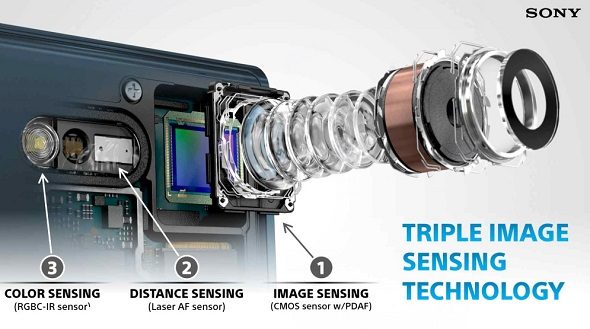
It will be difficult to find a phone with a large image sensor. But the Nexus 6P phone in 2015 was an exception, its 12.3-megapixel camera and 1 / 2.3-inch image sensor were among the largest phones that contain this size, and it also had a pixel size of 1.55 μm, which is larger than a pixel phone. 2 which has a smaller 1.4μm pixel size as well as 1 / 2.6 '' sensor size. Looking at such a phone, the size of the sensor alone is not a criterion for the quality of the camera, as modern phones are better than it and its old ilk anyway.
Of course, the sensor size is not usually announced, and only a specialist is looking for it. So did you search and check one day for the size of this sensor before buying your phone? More generally "No", we just look for the number of pixels!
Wider aperture
Like standalone digital cameras, phone cameras have aperture. The aperture controls the amount of light that reaches the image sensor. In standalone cameras, the aperture is controlled to improve lighting conditions, dimming, etc., whereas in phones it is quite restrictive. Phone companies are working hard to develop a larger aperture lens as possible, and this is a bit difficult, as it is necessary to maintain the shutter speed sufficiently so that the image does not come out blurry. In short, very large openings have negative sides, which cannot be mentioned.
The size of the aperture is measured with the symbol f or f-stops such as f / 1.5. The larger the number, the smaller the aperture, and the smaller the number, the larger the aperture. That is, f / 1.4 refers to a large aperture, while f / 22 refers to a small aperture.

Last year, 2017, LG presented its wonderful V30 phone with a 16-megapixel camera with an f / 1.6 lens slot, and it was considered the widest camera slot among existing phones, and LG called it "real magic" and rightly so, because it has surpassed the dual-slot technology that Samsung introduced in the S9 That allows you to switch between f / 1.5 and f / 2.4 apertures.

The development is still going on, and companies are working to expand the openings for the cameras as much as possible to introduce more light to the sensor and get a clearer image than before.
The article has not ended yet, there are still other factors that we did not mention through which the quality of the image is complete and its precise features and details are clear. You must know it so that you can judge the camera of any smartphone in terms of its quality and the quality of its production, and thus be an expert in this field.
Tell us what you focus on most when reviewing the phone's camera specifications? Do you prefer to review technical details or actual photos?
Sources:





20 comment